What cracks in a slab, brick or drywall can and cannot tell you, what sealing one costs, when to call an engineer, and how to keep a crack log.
Checked September 21, 2026 · 16 sources · 8 min read
A crack is a symptom, not a diagnosis. Sealing one can be worth doing, but a sealed crack says nothing about whether the house is still moving. This page covers what the cracks around your house can and cannot tell you, what sealing one costs, and when to pay for an engineer instead.
Is this crack a sign of a foundation problem?
It can be, but a crack alone does not answer the question. Texas home inspectors treat cracks as one of several signs that a foundation may not be performing well, alongside sticking doors and sloping floors. Whether the house has actually moved too far is something only measurements can show.
Where is the crack?
Where a crack shows up tells you what to watch, not what caused it. The Texas inspection standards name cracks in walls, ceilings, floors and windows, and cracking in brick or stone veneer, as signs to report. Each spot has related signs worth checking at the same time.
Drywall and ceiling cracks
The standards list “window, wall, floor, or ceiling cracks or separations.” Check the doors nearby while you look, because “binding, out-of-square, non-latching doors” are on the same list. One Texas homeowner who found a crack in the ceiling paint near the front door asked, “Should I be worried?”
Brick and trim cracks
Outside, the list includes “rotating, buckling, cracking, or deflecting masonry cladding,” which means brick or stone veneer. It also includes “framing or frieze board separations.” The frieze board is the trim board where the top of the wall meets the eaves.
Slab and floor cracks
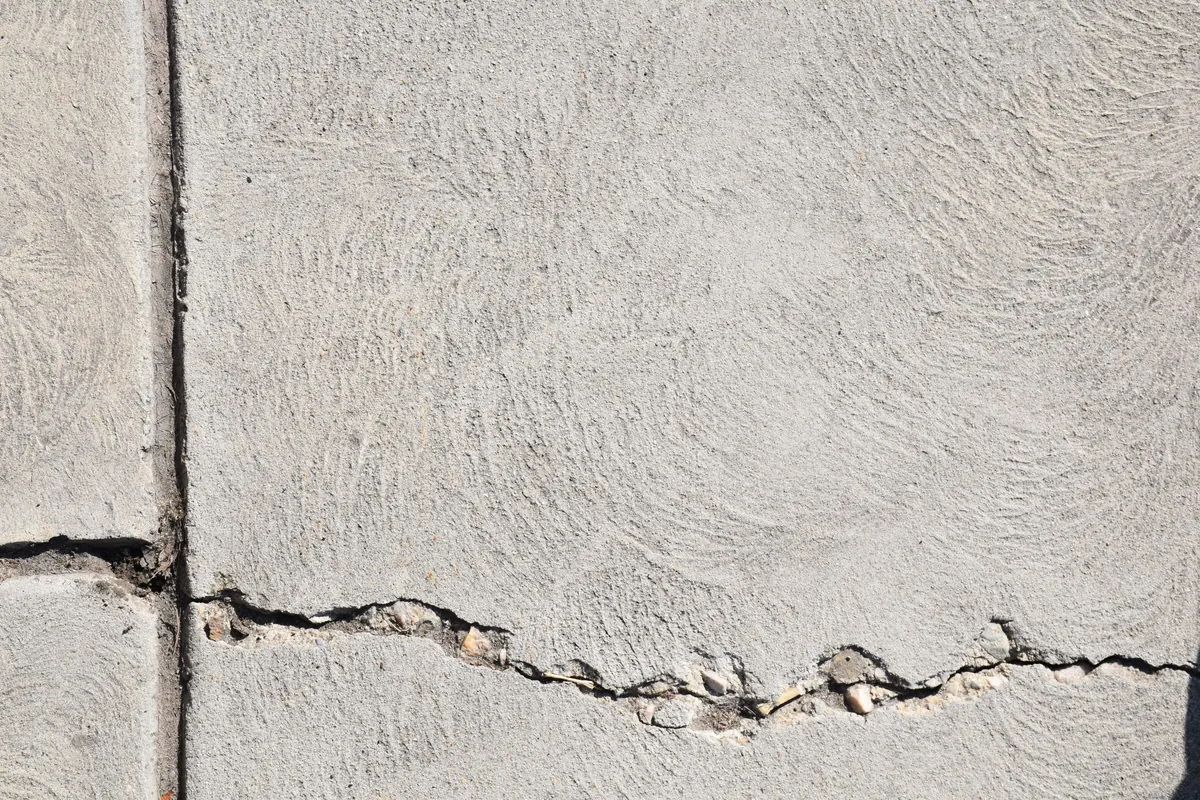
Floor cracks are on the list, and so are “sloping floors.” If a crack in the slab shows bare reinforcing steel, the inspector must report “exposed or damaged reinforcement” as a deficiency. One Texas owner of a house about a year old found a floor crack that “has broken several tiles in half.”
What does crack repair do, and what does it cost?
It seals the crack, and that is all it does. Industry estimates put crack injection at $250 to $800 per crack. Injection does not stop the foundation from moving. Treat it as a patch on a symptom, best done once you know the house is not still moving.
What whole jobs cost
Job
Typical total
Where the figure comes from
Slab repair with piers (a corner to the whole perimeter)
$5,000 to $25,000
Contractor averages: Stratum about $5,300 (DFW), Anchor about $11,000 for pressed piles, Olshan $11,950 (national, 2026); HomeGuide and Angi put underpinning at $10,000 to $30,000
Industry estimates compiled from the sources named in each row, checked September 21, 2026. These are not Tyler prices. No Tyler foundation company publishes its prices, and no government or university dataset of foundation repair costs exists for Tyler or East Texas.
The table also shows mudjacking and foam lifting, which raise sunken concrete and are priced by the square foot. That is a different job from sealing a crack. If a bid bundles crack work with piers or lifting, ask what each part costs, and compare it with our cost guide.
If the house is still moving, the repair the engineer recommends is what matters, not the crack. See slab foundation repair or, for a house over a crawl space, house leveling.
When does a crack mean you should call an engineer?
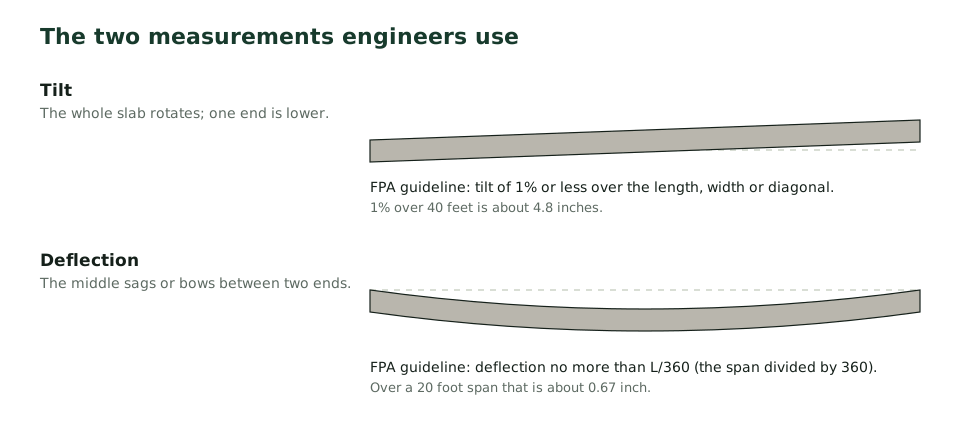
When you need to know why it cracked, or how far the house has moved. Texas’s engineering board says analyzing the cause of a foundation problem is engineering. An engineer’s evaluation, usually $300 to $800, measures tilt and deflection, which a crack alone cannot show you.
Good reasons to call one: several of the signs on the state’s list show up at once, a crack in your log keeps getting wider, or a crack comes back after it was sealed. Our foundation inspection page explains the three kinds of look and what each costs.
Engineers judge those two numbers against published limits. The Foundation Performance Association, a Houston professional group, sets its tilt limit at 1% and its deflection limit at L/360. These are guidelines, not law, and the engineer should show you the numbers for your house.
Tilt and deflection, the two measurements engineers use. The Foundation Performance Association recommends tilt of 1% or less and deflection of no more than L/360.
What does East Texas soil have to do with cracks?
Some of it shrinks when dry and swells when wet, and the county soil survey warns that this “can damage roads, dams, building foundations, and other structures.” The Smith County survey flags shrink-swell as a building-site limit for its most widespread soil, Cuthbert, and for several others.
It is patchy, though. The same survey calls the sandier Wolfpen and Pickton soils “suited to most urban uses.” Van Zandt County is another story: about 63% of it is in soil units whose limits include shrink-swell, mostly rated “high.”
So the risk varies lot by lot with what lies under the topsoil, and a crack is a reason to measure, not to guess. Water is the part you can manage; see drainage correction and our soils guide.
How should you keep track of a crack?
A dated record turns a worry into evidence. Photograph each crack with a ruler or coin beside it, write down the date and the width, and mark the ends with a pencil line. Check again every few weeks and after big changes in the weather, so you and any engineer can see whether it grows.
Note the month too. At Tyler, June and October are the wettest months and July the driest, by NOAA’s 1991 to 2020 normals. A log that runs through a summer shows whether a crack changes with the weather.
Bring the log to any inspection. It gives the engineer or the company a history they cannot see in one visit. Our guide to the signs of foundation problems covers the other warning signs to watch.
Does the age of the house matter?
It changes what paperwork to look for. In Bullard, 73.7% of homes were built in 2000 or later, so the first document to find may be the builder’s written warranty. In Tyler, 52.6% of homes were built before 1980, so look for records of any earlier foundation work.
Lindale sits between them, with 45.9% of its homes built in 2000 or later. Wherever you are, if you are buying, the Texas seller’s disclosure form asks whether the seller knows of defects in the “Foundation/Slab(s)” and of any “Previous Structural or Roof Repair.” Our guide to buying a house with foundation repair covers what to ask the seller for.
Before you hire anyone
Check the company yourself
Texas does not license foundation repair companies. Bills to create a license passed the Senate in 2011 and died in the House, and a second attempt in 2013 also failed (SB 1399, HB 613). So the checks that matter are yours to make. Each takes a few minutes.
Ask who the engineer is. The Texas engineering board says working out why a foundation moved, or recommending how to repair it, is the practice of engineering (Advisory Opinion 43). Get the engineer's name and look up the license on the state roster.
Check the plumber's license. If the job includes a plumbing test or a leak repair, the plumbing has to be done under a licensed plumber. Look the license up with the Texas State Board of Plumbing Examiners.
Read the warranty before you sign. Get it in writing, see whether it transfers when you sell, and find the clauses that void it. Watering and plumbing conditions are the ones homeowners most often learn about too late.
Ask who pulls the permit. Most cities here charge a permit fee for repairs, and Canton names foundation repair in its fee schedule. Unincorporated county land has no building permit at all. Our permit guide lists each office.
Keep the paperwork. If a job goes wrong, Texas law makes you give the company written notice at least 60 days before you sue under the Deceptive Trade Practices Act (Bus. & Com. Code §17.505). Estimates, contracts, photos and emails are your record.
We pass it to one independent foundation repair company that works in your area. Not a list, and not an auction.
2
They call to set up a visit
Most Tyler-area foundation companies advertise a free inspection or estimate. Ask on that first call, so there are no surprises.
3
You get a written estimate
It should name the repair method, how many piers and where, who designs the repair, the permit, the warranty and the price. Compare it with our published price ranges.
4
You decide
There is no obligation. If you want a second opinion, an independent structural engineer's evaluation usually costs $300 to $800.
Foundation crack questions
Is this something to be really concerned about, or just have it checked and it'll probably be fine?
Have it checked, and know which kind of check you are getting. A home inspector notes visible signs but does not have to find the cause. A company inspection is usually free and ends in a bid. A structural engineer, usually $300 to $800, measures the house and gives an opinion on why it cracked. Either way, start a dated photo log today.
Cracks in the ceiling. Is it just normal settling or structural?
The sources we rely on do not define “normal settling,” and the Texas Department of Insurance guide does not use the word. What an engineer can tell you is whether the house’s tilt and deflection are within guideline limits, such as tilt of 1% or less. A ceiling crack is one of the signs Texas home inspectors must report, so log it and watch it.
I am wondering if my foundation has shifted. Should I be worried?
Not until you know more, but do not ignore it. Look for the other signs on the state’s inspection list: sticking doors, sloping floors, gaps at the trim where the walls meet the eaves, and cracks in brick. Photograph and date what you find. If several show up together, or a crack keeps widening, have a structural engineer measure the house.
New house, foundation settling or something worse?
A crack in a new house is one of the same signs inspectors report on any house, so treat it the same way: log it, look for the other signs, and get the house measured if they add up. Also find the builder’s written warranty and read what it covers and for how long. Our research does not cover builder warranty law, so for a dispute, ask a Texas lawyer.
Does insurance pay to fix foundation cracks?
Often not. The Texas Department of Insurance says most home policies don’t cover “Earthquakes or earth movement” or “Wear and tear,” and it lists “Damage to foundations or slabs” as a common add-on. A crack tied to a covered event, such as a sudden pipe burst, may be treated differently. Read your policy and ask your agent. Our insurance guide has more; this is not insurance advice.
Sources
Each source was opened and checked on the date shown. If a link has moved, tell us and we will fix it.
Get a written estimate from a local foundation company
Tell us what you are seeing and where the house is. Your request goes to one independent foundation repair company that works in your part of East Texas. Ask them the questions on this page before anyone lifts a shovel.